Every perimenopause sleep article covers the same ground: limit caffeine after 2pm, no screens before bed, consistent wake time. That advice is correct. It's also insufficient.
What it misses is that the room itself — its temperature, light levels, sound environment, and the physical properties of what you sleep on — is doing active work on your nervous system throughout the night. For women whose thermoregulation has been disrupted by oestrogen fluctuation, an unmanaged sleep environment can undermine even a perfect behavioural routine.
Perimenopause changes the hypothalamus's temperature setpoint — the internal thermostat that regulates body heat. The result is a narrower thermoneutral zone: smaller fluctuations in temperature trigger large heat-loss responses (sweating, flushing, waking). What this means practically is that environmental temperature matters more for you now than it did five years ago.
The good news: environment is entirely controllable.
Temperature — The Most Important Variable
Your core body temperature needs to drop approximately 1°C to initiate and maintain sleep. The sleep environment needs to support that drop — and for perimenopausal women, this means going lower than the standard recommendation.
Most sleep research suggests 16–19°C (61–67°F) as optimal. Women with active vasomotor symptoms often do better at the lower end of that range, or below it.
The limiting factor is usually the mattress. Standard mattresses trap body heat. Memory foam is particularly problematic — it contours to the body, reducing the surface area available for heat dissipation. A cooling mattress topper sits between the mattress and your sheets and actively draws heat away from the body. Phase-change materials (PCMs) absorb heat at body temperature and release it at lower temperatures; gel-infused foam provides passive cooling. The difference in reported night waking frequency between women using cooling toppers and those who don't is substantial enough that it's one of the first environment changes worth making.
The second lever is the duvet. A lightweight bamboo or eucalyptus fibre duvet wicks moisture more effectively than synthetic fills and regulates temperature in both directions — useful on nights when the thermoneutral window is shifting.
Darkness — More Total Than You Think
Light suppresses melatonin via the retinohypothalamic tract. Even low-level light — a standby LED, streetlight through thin curtains — can blunt melatonin production and shift circadian phase.
In perimenopause, melatonin production declines (partly oestrogen-dependent, partly age-related), so the signal is already weaker. Allowing any competing light source makes it weaker still. Blackout curtains are the environmental intervention with the highest evidence-to-cost ratio in sleep research. Total darkness isn't just about blocking light you can see — it blocks the low-level photonic input that the suprachiasmatic nucleus (your master clock) is processing even through closed eyelids.
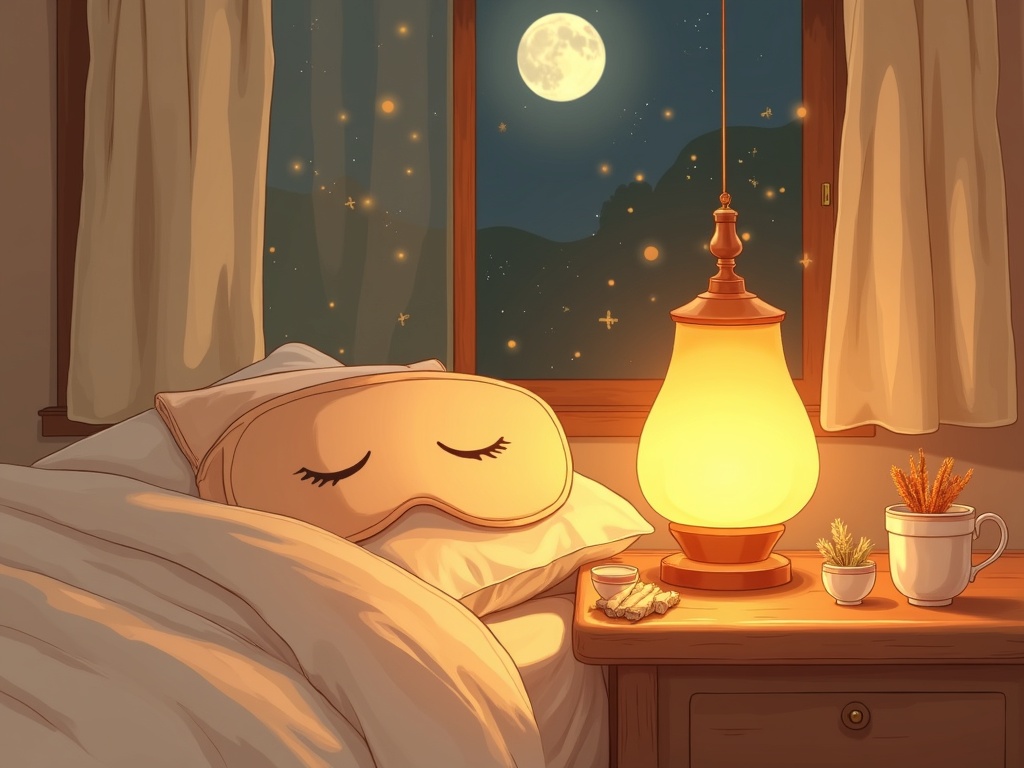
For travel, or for those who can't install blackout curtains, a 100% blackout sleep mask provides equivalent benefit. The key features for perimenopause: breathable material (no heat trapping), zero eye pressure (so REM eye movement isn't restricted), and side-sleeper friendly design.
Sound — Masking vs. Silence
The research on silence vs. white noise is more nuanced than most sleep content suggests. True silence can be harder to sleep in than consistent low-level masking sound, because true silence amplifies anomalous noises (a car, a dog, a partner moving) that trigger arousal responses.
White noise, pink noise, and brown noise work by raising the ambient sound floor — making the signal-to-noise ratio of any disruptive sound lower. For light sleepers, which many perimenopausal women become as sleep architecture fragments, consistent masking sound can reduce the number of full awakenings per night. A dedicated white noise machine (not a phone app) produces higher-quality, more consistent sound without the sleep-disrupting effects of having a phone in the room. Place it between you and the noise source for maximum masking effect.
Comfort Layer — Pressure and Weight
Perimenopausal sleep fragmentation often involves extended light-sleep phases and difficulty returning to deep sleep after waking. Deep pressure stimulation — the mechanism behind weighted blankets — activates the parasympathetic nervous system and increases serotonin and melatonin precursor production. Several small studies show reduced anxiety and improved sleep onset with weighted blankets in populations with sleep disruption.
The evidence isn't strong enough to call this a first-line intervention. But for women who wake at 2–3am and struggle to return to sleep, the calming proprioceptive input from a weighted blanket is a low-risk addition to try. Use a lighter weight (7–10kg) if you're heat-sensitive, and choose cotton over synthetic fill. Pair it with a cooling gel pillow — the head and neck are significant heat-loss sites, and a pillow that traps heat defeats the cooling environment you've built around it.
The Complete 5-Thing Setup
In order of impact:
1. Cooling mattress topper — address the heat retention problem at the source. Phase-change or gel-infused. This is the single highest-leverage item.
2. Blackout curtains or sleep mask — total darkness for full melatonin signal. Even low-level light undermines a signal that's already weaker in perimenopause.
3. White noise machine — raise the ambient sound floor, reduce arousal from anomalous noise. Dedicated hardware outperforms phone apps.
4. Weighted blanket (cotton, lighter weight) — deep pressure for parasympathetic activation on waking. Most useful for the 2–3am return-to-sleep problem.
5. Cooling gel pillow — complete the thermal environment. The head is a major heat-loss site; don't let the pillow undo the rest.
None of these replace HRT if it's appropriate for you, or behavioural sleep therapy (CBT-I) if you have established insomnia. They're the environment layer — the foundation that everything else sits on.
"If you share a room with a partner who runs cold, a cooling mattress topper addresses your side specifically without requiring the room to be cold enough to disrupt their sleep. It's a better solution than a temperature conflict."
Frequently Asked Questions
Research suggests 16–19°C (61–67°F) is optimal for most people. Women with active vasomotor symptoms often do better at the lower end, or slightly below. The key is reducing heat buildup at the sleep surface — which means addressing the mattress (cooling topper), bedding (breathable fibres), and room temperature in combination.
Some women find weighted blankets helpful, particularly for the 2–3am waking pattern common in perimenopause. The mechanism is deep pressure stimulation, which activates the parasympathetic nervous system. The evidence is modest but the risk is low. If you run hot, choose a lighter weight (7–10kg) and cotton fill over synthetic.
Light suppresses melatonin via the retinohypothalamic tract — even low-level light from streetlights or standby LEDs can blunt melatonin production. During perimenopause, melatonin production is already lower, so total darkness matters more. Blackout curtains or a properly fitted sleep mask eliminate all competing light input.
Generally yes. A dedicated machine produces more consistent audio without the sleep-disrupting effects of having a phone in the bedroom (notifications, light). It also doesn't run out of battery or require data. For masking disruptive sounds, consistent audio quality matters — dedicated hardware does this better than apps.
The 3am Protocol
Ready to fix your sleep architecture?
28 days of circadian resets using Korean saenghwal practices and sleep science. No melatonin required.
Learn more →
Amazon Associate links — I earn a small commission at no extra cost to you.
Some links in this article are Amazon Associate links. If you purchase through them, I earn a small commission at no extra cost to you. I only link products I'd genuinely recommend.