You were fine until you weren't. Sleep was never perfect, but it worked. Now you're waking somewhere between 2:30 and 4am with a clarity that feels almost cruel — not groggy, just awake. Heart slightly elevated. Thoughts already moving. A body that has apparently decided 3am is a great time to be extremely conscious.
If you've been told this is perimenopause doing its thing — hot flashes disturbing sleep, wait it out — you've been handed an incomplete picture. I hear this constantly from women who've been managing their night sweats for months and still can't sleep. The disruption isn't primarily driven by night sweats. It's driven by a structural change to your sleep architecture that starts years before your cycle visibly changes — and that most sleep advice was never designed to touch.
The Hormone Architecture: What Progesterone Actually Does to Your Sleep
Progesterone isn't just a reproductive hormone. It's a sleep hormone — and this was the finding that changed how I think about the whole picture. It binds to GABA receptors in the brain — the same receptors that benzodiazepines target — producing a mild sedative effect that deepens and sustains sleep. When progesterone is stable, sleep has a particular quality: you drop into it, you stay in it, you wake rested.
As perimenopause begins, progesterone declines first, and it declines sharply. Not a gentle slope. A drop. For many women, progesterone falls significantly in the two to three years before their period actually changes — which means you can be having regular cycles, no significant hot flashes, and ALREADY experiencing the sleep disruption of early perimenopause. The cycle looks fine. The sleep doesn't. And your GP is looking at the cycle.
The result is lighter sleep across the board. More time in N2 — the light stage where you're technically sleeping but not restoring. Less deep sleep (N3 slow-wave), where memory consolidation and cellular repair happen. More nighttime awakenings. The hours stay the same, or close to it. The architecture quietly collapses.
Oestrogen adds a second layer. Oestrogen modulates REM sleep and body temperature regulation. As oestrogen fluctuates — it doesn't decline cleanly; it spikes and dips unpredictably across the transition — it disrupts the thermoregulatory calibration that deep sleep requires. Your body needs its core temperature to drop 2–3°F to initiate and sustain deep sleep. Erratic oestrogen interferes with this system directly.
"Progesterone is a sleep hormone. When it declines, sleep declines — even if your cycle looks normal, even if you're not having hot flashes yet. The architecture changes first."
Night Sweats Are the Symptom. The Architecture Problem Is Deeper.
Night sweats get the blame because they're visible. They're uncomfortable. They're hard to argue with. But they're a symptom of the deeper hormonal disruption — not the primary cause of the sleep fragmentation.
This distinction matters practically. Women who manage their night sweats — cooler room, moisture-wicking layers, no alcohol, eating earlier — often find their sleep improves. But not completely. The residual fragmentation is the architecture problem that was already there before the sweats started. Fixing the sweats is necessary. It's not sufficient.
The hot flash mechanism is a thermoregulatory dysfunction. Oestrogen fluctuation causes your body's internal thermostat — located in the hypothalamus — to malfunction, triggering a heat-release event. These events wake you because your body is executing an emergency temperature reset, not because the dampness of your sheets is physically uncomfortable.
Korean medicine has a name for this pattern: 상열 (sang-yeol) — literally "rising heat." The traditional description of qi (기) moving upward and creating internal heat during the menopausal transition maps with reasonable accuracy onto what Western research now describes as hypothalamic thermoregulatory dysfunction. The Korean clinical response — cooling foods, downward-moving qi practices, specific acupressure points — targets the heat-rising pattern directly. This isn't metaphor dressed up as medicine. It's a different vocabulary for the same mechanism. My grandmother would have recognised every part of this description. We just didn't have the imaging studies to confirm it yet.
The 3am Wake-Up Is Not Random
The specificity is worth paying attention to. Not 1am. Not 4:30. Usually somewhere between 2:30 and 4. And when you wake, you're not drowsy — you're alert. Sometimes anxious. Sometimes with a low-grade racing quality that makes falling back to sleep feel physiologically impossible, not just difficult.
Here's what's actually happening. Cortisol — your primary alerting hormone — follows a precise diurnal rhythm: lowest in the first half of the night, then rising steadily toward dawn to prepare you for waking. This rise normally begins around 4–5am. In perimenopause, the combination of declining progesterone, fluctuating oestrogen, and dysregulated HPA axis activity appears to shift this cortisol rise earlier — sometimes significantly. You're getting your morning wake-up signal at 3am. Not 5am. 3AM.
The alert, can't-turn-off-the-thoughts quality of perimenopausal 3am waking is largely cortisol-mediated. It feels like anxiety. It isn't, fundamentally, anxiety — it's an endocrine alarm clock firing three hours early. Which means the fix isn't a sleep supplement or a breathing exercise. It's architectural and circadian. Completely different problem.
What Korean Medicine Understood About This Transition
Korean medicine has a term for the menopausal transition: 갱년기 (gaeng-nyeon-gi) — literally "renewal year period." Not "decline." Not "deficiency." A reorganisation. I grew up around this vocabulary. My halmeoni wouldn't have called this a medical condition — she'd have said the body is renegotiating its terms. I find that more useful than most clinical framings. Not because it's gentler. Because it changes what you do about it.
Two practices from that tradition that map directly onto the sleep research:
Evening food as medicine. The Korean concept of 약식동원 (yak-sik-dong-won) — food and medicine share the same origin — informs the use of specific evening foods to cool internal heat and support sleep during gaeng-nyeon-gi. Jujube (대추, daechu) has been used for centuries as a sleep support in Korean and Chinese medicine. Research suggests it contains saponins that may influence sleep duration and interact with GABA receptors — the same pathway that declining progesterone is disrupting. Barley tea (보리차, boricha), served warm or cool, is a Korean evening staple with mild cooling properties and no caffeine. Neither replaces HRT. Both are consistent with what the research shows about evening metabolic load and thermoregulation.
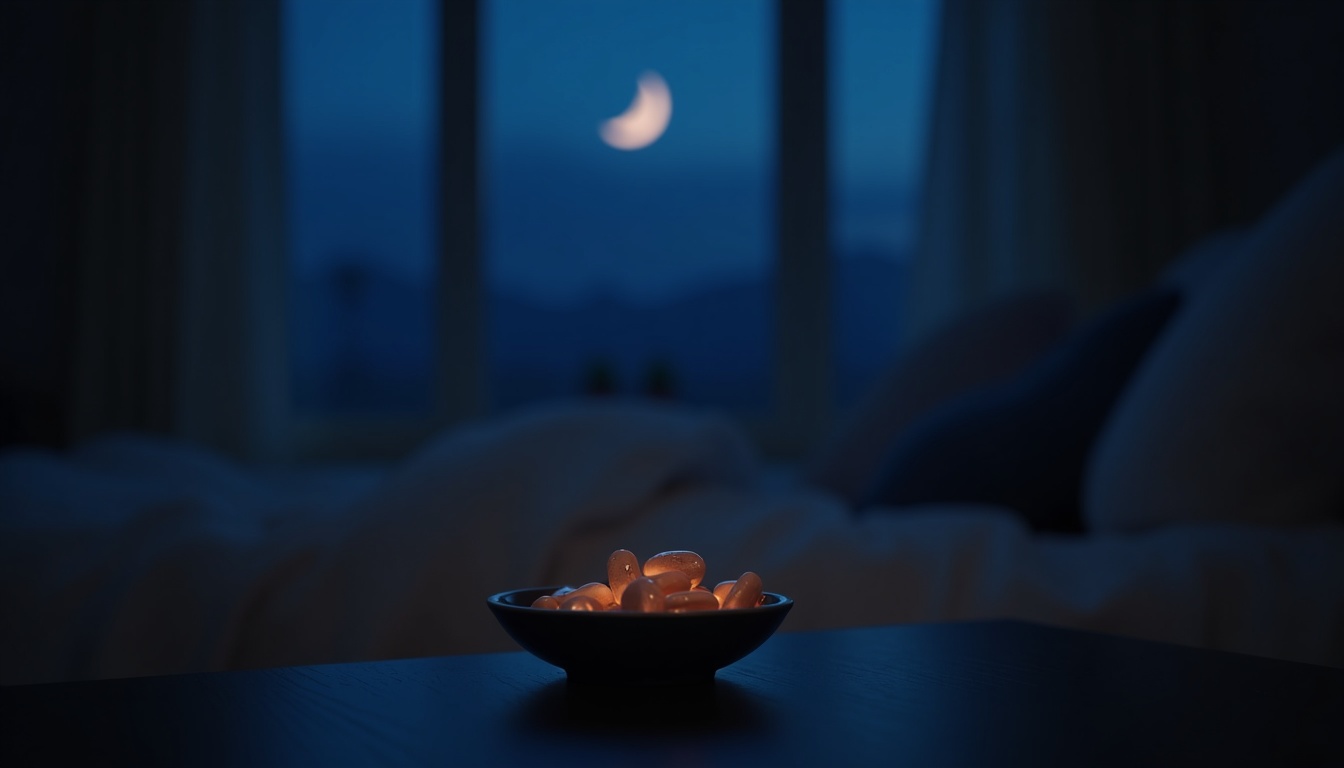


Amazon Associate links — I earn a small commission at no extra cost to you.
The warm bath as a temperature reset. Korean jjimjilbang culture includes warm bathing as a pre-sleep practice — not for relaxation, but for a specific physiological effect. A warm bath 60–90 minutes before bed raises your skin surface temperature, then triggers a compensatory drop in core body temperature as your body dissipates the heat. This core temperature drop initiates and sustains deep sleep. For perimenopausal women whose thermoregulatory system is already dysregulated, a deliberate external temperature intervention can substitute for the signal that oestrogen fluctuation is disrupting. This is not a comfort ritual. It is a circadian intervention.
What Actually Moves the Needle
I've distilled this down to the changes with the clearest mechanistic support for this specific disruption pattern. Not a supplement list. Not an HRT recommendation — that conversation belongs with your GP. These are the things I'd tell a friend who came to me with this, before I sent her anywhere else.
Room temperature: 65–67°F (18–19°C). Your thermoregulatory system is already under stress. Don't make it fight the room temperature as well. This is the single highest-leverage environmental change for perimenopausal sleep.
Warm bath 90 minutes before bed. Not a shower. The bath-then-cooling sequence creates the core temperature drop that initiates deep sleep. This is the Korean jjimjilbang principle, backed by thermoregulation research. 20 minutes at 104°F (40°C).
Zero alcohol. Not less. Zero. Alcohol suppresses progesterone further, fragments the second half of sleep, and raises body temperature — the opposite of every mechanism you need. There is no safe evening glass during perimenopause if sleep is the priority.
Caffeine before noon. Caffeine sensitivity increases during perimenopause, and its effect on the adenosine system compounds with the cortisol dysregulation. Afternoon coffee is not a neutral choice during this transition.
Eating by 7pm (or 3 hours before sleep). Digestion keeps you in light sleep. During perimenopause you have less deep sleep to lose. Every hour of digestion during the night is an hour not spent in N3.
Jujube tea (대추차) in the hour before bed. Evidence-consistent, low-risk, and a specifically Korean answer to sang-yeol. Available at any Korean supermarket or online. Brew 5–6 dried jujubes in hot water for 10 minutes.
No screens after 9pm. Oestrogen fluctuation has already destabilised your circadian light signalling. Blue light exposure late in the evening makes the cortisol timing problem worse — pushing the midnight cortisol trough shallower and the early-morning rise earlier.
The underlying thread across all of these is the same: you're working with a hormonal system in active transition. The goal isn't to force sleep or suppress symptoms — it's to reduce the variables making the transition harder, so your nervous system can find as much architecture as it can while the reorganisation is happening. You can't rush 갱년기. But you can absolutely stop making it worse.
The sleep disruption is real. It's also not permanent. Building the architecture now means the transition is less severe — and the landing is softer.
Frequently Asked Questions
No. Standard insomnia is primarily a hyperarousal condition — the brain is stuck in alert mode. Perimenopausal insomnia is primarily an architecture problem driven by hormonal changes that affect sleep stages, body temperature regulation, and the cortisol rhythm. They overlap, but the mechanisms are different. Standard CBT-I or sleep hygiene advice often helps at the margins but doesn't address the hormonal architecture disruption directly.
Timing is the main signal. If sleep fragmentation emerged in your late 30s or 40s — alongside any cycle irregularity, mood shifts, or unexplained changes in energy recovery — perimenopause is a strong candidate even if your periods look normal. A GP can test FSH (follicle-stimulating hormone) levels, which rise as ovarian function begins to decline. This is not a diagnosis to make alone.
For many women, yes — by stabilising oestrogen and progesterone, it can restore the sleep architecture that hormonal fluctuation is disrupting. Progesterone supplementation specifically has a direct sleep-promoting effect via the GABA pathway. Whether HRT is appropriate depends on your complete health picture — this is a conversation with your doctor, not something a wellness guide should be recommending.
Most women see meaningful improvement once they've fully transitioned into menopause and hormone levels stabilise at their new (lower) baseline — typically within 1–3 years post-final period. The perimenopausal transition itself is the most disruptive phase, because hormones are fluctuating rather than consistently low. Building strong architectural habits now reduces the severity of the disruption and protects the sleep quality you do have.
The 3am Protocol
Ready to fix your sleep architecture?
28 days of circadian resets using Korean saenghwal practices and sleep science. No melatonin required.
Learn more →Some links in this article are Amazon Associate links. If you purchase through them, I earn a small commission at no extra cost to you. I only link products I'd genuinely recommend.