The term "adaptogen" was coined in 1947 by Soviet pharmacologist Nikolai Lazarev, and refined by Israel Brekhman into a specific set of criteria: a substance that is non-toxic at normal doses, produces a non-specific resistance to stress, and normalises physiological functions regardless of the direction of the disturbance.
That last part matters. A true adaptogen doesn't simply stimulate or sedate — it modulates. The primary mechanism is regulation of the hypothalamic-pituitary-adrenal (HPA) axis: the hormonal cascade that governs your stress response, cortisol output, and downstream effects on sleep, immunity, metabolism, and mood.
In perimenopause, the HPA axis is already under strain. Oestrogen has a modulatory effect on cortisol regulation; as levels decline and fluctuate, the HPA axis becomes dysregulated — producing excess cortisol at the wrong times (elevated at 3am, sluggish in the morning), contributing to the fatigue, sleep fragmentation, mood instability, and brain fog that characterise the transition.
This is the mechanistic rationale for adaptogens in perimenopause. Not as hormone replacements — they aren't — but as HPA modulators that can reduce the amplitude of the dysregulation.
The caveat: the category has been colonised by marketing. Most products labelled "adaptogenic" contain inadequate doses of poorly standardised extracts, or herbs with no clinical evidence at all. What follows covers only the adaptogens with meaningful human data relevant to perimenopause.
"A true adaptogen doesn't simply stimulate or sedate — it modulates."
Ashwagandha (Withania somnifera) — The Evidence Leader
Ashwagandha has the strongest evidence base of any adaptogen for HPA axis modulation. KSM-66 and Sensoril are the two standardised root extracts with the most clinical data — most studies showing benefit use one of these, not generic ashwagandha powder.
What the research shows: consistent reductions in perceived stress and serum cortisol in double-blind trials, with effects typically apparent at 8 weeks. A 2019 study in Medicine found 240mg of Sensoril daily reduced cortisol by 23% vs placebo; a separate KSM-66 trial found 600mg daily reduced stress scores by 44%.
For perimenopause specifically: a 2021 pilot RCT found ashwagandha root extract improved menopausal symptom scores (hot flashes, mood, sleep) significantly vs placebo over 8 weeks. This is a small study — treat it as promising, not definitive.
300–600mg daily of a standardised extract (KSM-66 or Sensoril). Take in the evening — it has mild sedative properties that work with sleep. Avoid in pregnancy, thyroid conditions, or autoimmune disease. Cycle use: 8–12 weeks on, 4 weeks off.
Rhodiola Rosea — For Fatigue and Cognitive Load
Rhodiola acts on a different node of the stress system than ashwagandha — primarily on monoamine neurotransmitter regulation (serotonin, dopamine, norepinephrine) and mitochondrial ATP production. Its primary clinical effects are on fatigue, cognitive performance under stress, and mood.
A 2009 Phytomedicine trial found 400mg/day rhodiola for 4 weeks significantly reduced burnout symptoms vs placebo. A 2012 Phytotherapy Research meta-analysis of 11 trials concluded rhodiola consistently improved mental fatigue, concentration, and mood in stressed populations.
For perimenopause: if your primary complaint is the cognitive flatness, afternoon energy cliff, or the sense of being simultaneously exhausted and wired, rhodiola is the better fit than ashwagandha. They address different things.
200–400mg daily of an extract standardised to 3% rosavins and 1% salidroside. Take in the morning or early afternoon — unlike ashwagandha, rhodiola is mildly stimulating and can interfere with sleep if taken late. Avoid if you have bipolar disorder.
Schisandra (오미자, Omija) — The Korean Adaptogen
Schisandra chinensis (called 오미자, omija, in Korean — the "five-flavour berry") has a 2,000-year history in Korean and Chinese medicine as a tonic for the liver, kidneys, and nervous system. In adaptogenic terms, its primary documented effects are hepatoprotective (liver), anti-fatigue, and cortisol-modulating.
The clinical evidence is thinner than ashwagandha or rhodiola — most schisandra research is in vitro or animal studies, with some small human trials. What we do have: schisandrin B, one of its active lignans, has demonstrated anti-inflammatory and neuroprotective effects in cell studies; one human trial found improved mental performance and reduced cortisol in nurses during stressful work periods.
It's not a first-line evidence pick. But for women who prefer to anchor their practice in Korean traditional medicine — and who find ashwagandha too sedating — omija tea or a schisandra extract is a reasonable evening ritual with a real pharmacological rationale.
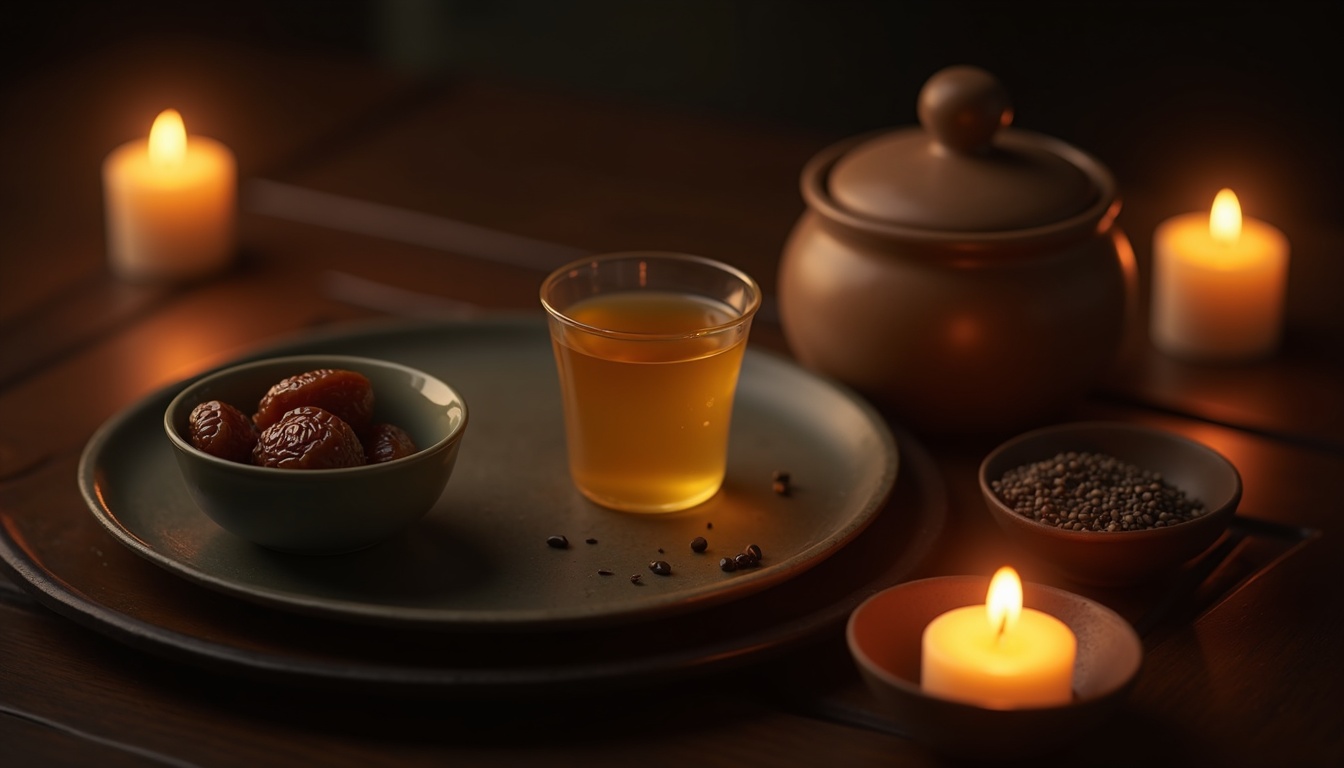
In Korean practice, omija is most often consumed as a tea (오미자차): dried berries steeped in cold water overnight, producing a tart, ruby-coloured infusion. The taste is distinctive — simultaneously sweet, sour, bitter, pungent, and salty.
As tea: steep 1–2 tablespoons dried berries in cold water for 8–12 hours. As a supplement: 500–1,500mg standardised extract. No significant interactions documented, but avoid in pregnancy.
Maca Root — Honest Assessment
Maca (Lepidium meyenii) is the most heavily marketed adaptogen for women's hormonal health, and the one with the most overstated claims. It does not contain hormones, nor does it directly modulate oestrogen or progesterone. What it appears to do is support hypothalamic-pituitary function independently of hormonal pathways — influencing LH and FSH rather than the hormones themselves.
The clinical evidence is modest: a 2006 double-blind trial found gelatinised maca reduced menopausal symptom frequency (hot flashes, night sweats, insomnia) vs placebo; a 2011 review concluded effects were real but small. Effects on libido — the most commonly cited benefit — have some support from small trials. Importantly: gelatinised maca (heat-processed) is significantly better absorbed than raw maca powder, and is gentler on digestion.
1.5–3g gelatinised maca daily. Works well in warm drinks — it has a mild butterscotch flavour. Effects are subtle and cumulative; allow 6–8 weeks to assess. Not a substitute for HRT if hot flashes are severe.
What to Skip
Most products in the "women's hormone balance" category combine underdosed versions of multiple adaptogens with additional herbs that have weak or no evidence. The combination approach also makes it impossible to know what's working or causing side effects. Avoid: maca + ashwagandha + rhodiola + 7 other things in one capsule. Buy single-herb standardised extracts. Dose correctly. Assess at 8 weeks before adding anything else.
The Honest Starting Point
If you're going to start with one: ashwagandha KSM-66, 300–600mg in the evening, for 8 weeks. It has the most clinical evidence, the clearest mechanism for the HPA dysregulation driving perimenopause symptoms, and a reasonable safety profile.
If fatigue and cognitive load are the main complaint, add or substitute rhodiola in the morning. Schisandra as an evening tea is a good ritual addition — low risk, pleasant, culturally grounded. Maca is worth trying if hot flashes and libido are primary concerns.
None of these replace HRT if it's appropriate for you. They address the same system — the HPA axis and its downstream effects — but with much smaller effect sizes. Think of them as supporting infrastructure, not the primary intervention.
The adaptogen supplement market has significant quality issues. Look for: NSF Certified, USP Verified, or Informed-Sport certified. For KSM-66 specifically, the branded ingredient certification guarantees you're getting the extract used in the clinical trials, not a generic root powder.


Amazon Associate links — I earn a small commission at no extra cost to you.
Frequently Asked Questions
Some adaptogens have meaningful clinical evidence for symptoms that overlap with perimenopause — particularly stress, fatigue, cognitive load, and sleep disruption. Ashwagandha has the strongest evidence base, with multiple double-blind trials showing cortisol reduction and improvements in menopausal symptom scores. Rhodiola has good evidence for fatigue and mood. Maca has modest evidence for hot flashes. None are substitutes for HRT if that's appropriate for you.
Ashwagandha (specifically KSM-66 or Sensoril standardised extracts) has the strongest clinical evidence. If fatigue and cognitive flatness are the primary complaint, rhodiola is a better fit. The two can be used together — ashwagandha in the evening, rhodiola in the morning — as they act on different parts of the stress system.
Generally yes at normal doses (300–600mg standardised extract daily) for most healthy women. Avoid if you have thyroid conditions, autoimmune disease, or are pregnant. Check with your prescriber if you're on thyroid medication, immunosuppressants, or sedatives.
Omija (오미자) is the Korean name for Schisandra chinensis berries — the "five-flavour berry." It has a 2,000-year history in Korean traditional medicine as a tonic for the nervous system and liver. Clinical evidence is limited compared to ashwagandha, but it has a real pharmacological basis as an HPA modulator. As an evening tea ritual, it's low-risk and grounded in the same food-as-medicine tradition (약식동원) that underpins Korean wellness.
The 3am Protocol
Ready to fix your sleep architecture?
28 days of circadian resets using Korean saenghwal practices and sleep science. No melatonin required.
Learn more →Some links in this article are Amazon Associate links. If you purchase through them, I earn a small commission at no extra cost to you. I only link products I'd genuinely recommend.