I want to start with something that might feel like relief: you are not losing your mind. The anxiety that appeared — seemingly from nowhere, in your early 40s, in a life that hasn't fundamentally changed — has a biological explanation. And it's one that most GPs still aren't connecting.
Up to 51% of women aged 40–55 report anxiety symptoms during perimenopause (Freeman et al. 2005). Women are 2–4× more likely to experience a depressive episode during perimenopause than premenopause (Cohen et al. 2006). These aren't small numbers. This isn't a niche experience. And yet the standard response is still overwhelmingly "have you tried mindfulness?" or an SSRI prescription — without anyone explaining why your brain suddenly feels like it's running on a different operating system.
The reason is biochemical. Specifically, it involves a neurosteroid called allopregnanolone that your brain has relied on for decades — and that is now declining along with the progesterone that produces it. Let me walk you through the mechanism, because understanding it changes everything about how you approach this.
The progesterone–ALLO connection your doctor probably hasn't explained
Here's what's happening at the molecular level. Progesterone — the hormone most people associate with pregnancy and menstrual cycles — is converted in the brain into a neurosteroid called allopregnanolone, commonly abbreviated as ALLO. Neurochemical research shows that ALLO is a potent GABA-A receptor modulator with a potency comparable to benzodiazepines. It's essentially your brain's endogenous anxiolytic — a built-in calming agent that you've had circulating since puberty.
GABA (gamma-aminobutyric acid) is the brain's primary inhibitory neurotransmitter. When GABA binds to GABA-A receptors, it reduces neuronal excitability — it's the brake pedal on your nervous system. ALLO enhances this effect dramatically. It doesn't just nudge the GABA system; it amplifies it. This is the same receptor site that benzodiazepines (Valium, Xanax) and alcohol target, which is why those substances produce calm and sedation.
Now: research suggests that declining progesterone in perimenopause leads to reduced ALLO production, which means less GABA-A modulation, which means increased anxiety sensitivity. Your brain's natural anxiolytic is being progressively withdrawn — not overnight, but in erratic waves that mirror progesterone's chaotic fluctuations during the perimenopausal transition.
This is not a metaphor. It's not a wellness narrative. It's receptor pharmacology. Your brain literally had a chemical that kept anxiety in check, and the supply is now unreliable.
"Your brain is adapting, not breaking. But it's adapting to the loss of a neurosteroid it relied on for decades."
Progesterone → converted by the enzyme 5α-reductase → 5α-dihydroprogesterone → converted by 3α-HSD → Allopregnanolone (ALLO) → binds to GABA-A receptors → enhances inhibitory signalling → calm, reduced anxiety, improved sleep.
When progesterone declines or fluctuates: less ALLO is produced → GABA-A modulation decreases → nervous system becomes more excitable → anxiety sensitivity increases.
Why everything feels more stressful now
The ALLO decline is the primary mechanism, but it's not the only one. The HPA axis — the hypothalamic-pituitary-adrenal cascade that governs your cortisol response to stress — becomes dysregulated during perimenopause. The cortisol response to stress is amplified: the same stressor that would have produced a manageable cortisol spike five years ago now produces an exaggerated one. And the recovery is slower. Your stress thermostat has been recalibrated without your consent.
Women with greater progesterone variability during perimenopause report more anxiety and mood symptoms. It's not just the decline — it's the instability. Your brain can adapt to a consistently lower level of a hormone. What it struggles with is unpredictable fluctuation: high one week, crashed the next, briefly normal, then low again. Each shift forces the GABA system to recalibrate, and during the recalibration, you're neurochemically exposed.
This explains why perimenopausal anxiety often feels different from anxiety you may have experienced before. It's more physical — chest tightness, a sense of vibration in the body, a startle response that's dialled up. It can appear without an emotional trigger. You're not anxious about something; you're anxious as a physiological state. That distinction matters, because it tells you the intervention needs to be physiological too.
Korean calm: what hanbang tradition gets right
In Korean traditional medicine (한방, hanbang), there's a concept called 허열 (heot) — restless nervous energy, often described as "empty heat" rising through the body. It manifests as insomnia, anxiety, heart palpitations, and a flushed face with cold extremities. Hanbang practitioners have treated this pattern for centuries with calming herbs and rhythmic breathing practices.
The Western mechanistic explanation maps cleanly onto what we now understand about HPA dysregulation and GABA decline. Heot isn't mystical — it's a phenomenological description of what happens when the nervous system loses its inhibitory tone. The Korean approach of treating it with calming botanicals and breath regulation is, from a neuroscience perspective, remarkably sound.
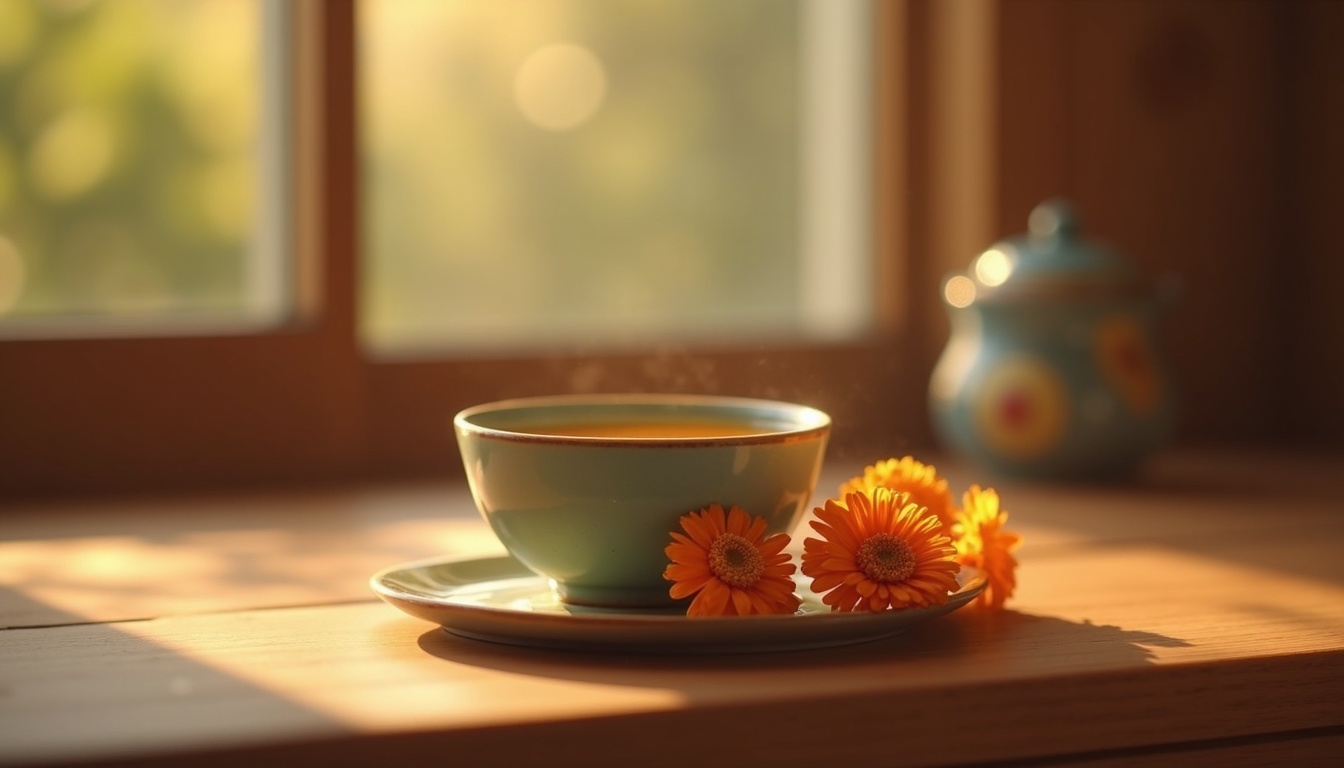
Jujube tea (대추차, daechu-cha) is the quintessential Korean remedy for heot. Jujube fruit (Ziziphus jujuba) has a long history in East Asian medicine as a nervine — a substance that calms the nervous system. Modern research has identified jujuboside A, a saponin in jujube, as having GABAergic activity. It's gentle, it's food-grade, and it's deeply embedded in Korean domestic practice. A warm cup in the evening is a ritual, not a supplement — and rituals matter for nervous system regulation.
Breathing practices — particularly extended exhale patterns — are another cornerstone of Korean calm practice. The physiological sigh (double inhale through the nose, long exhale through the mouth) directly stimulates the vagus nerve, shifting the autonomic nervous system toward parasympathetic dominance. Korean breathing traditions have used similar patterns for centuries, long before we understood the vagal mechanism.
Evidence-based tools that actually work
Understanding the mechanism is powerful, but you need practical tools. Here's what has the strongest evidence for the specific neurochemistry involved in perimenopausal anxiety.
Ashwagandha (KSM-66)
Ashwagandha KSM-66 reduces cortisol and anxiety scores in multiple double-blind randomised controlled trials. It works primarily on the HPA axis — the same stress system that's dysregulated during perimenopause. At 300–600mg daily, studies show significant reductions in both perceived stress and serum cortisol. It's not a GABA modulator directly, but by reducing the cortisol amplification driving the anxiety, it addresses the secondary mechanism. For a deeper dive on ashwagandha and the evidence hierarchy, see my adaptogens guide.
L-theanine (Suntheanine)
L-theanine is an amino acid found naturally in green tea. It promotes alpha brain wave activity — the same brain wave pattern associated with calm alertness, meditation, and creative flow — and reduces subjective anxiety without sedation. The beauty of L-theanine is that it works within 30–60 minutes and doesn't impair cognition. At 200–400mg daily, it's a gentle but measurable shift toward neurological calm. It's ideal for daytime anxiety where you need to stay sharp.
Magnesium glycinate
Magnesium glycinate supports GABA function directly. Magnesium is a natural NMDA receptor antagonist and GABA agonist — it calms neuronal excitability at the receptor level. The glycinate form is bound to glycine, itself an inhibitory amino acid, making it the most calming form of magnesium. At 200–400mg elemental magnesium before bed, it supports both anxiety reduction and sleep quality. Most women over 40 are magnesium-insufficient anyway, so you're correcting a likely deficiency while supporting the GABA system.
Movement — the non-negotiable
Exercise is the single most evidence-backed intervention for anxiety, and its effects on perimenopausal anxiety specifically are substantial. Moderate-intensity exercise (30–45 minutes, most days) increases endorphin and endocannabinoid production, upregulates GABA receptor sensitivity, and improves HPA axis regulation. It's not a supplement — it's the foundation. Walking counts. Swimming counts. Strength training counts. The dose is consistency, not intensity.
Morning: L-theanine 200mg with green tea or breakfast. Exercise (30+ minutes moderate).
Evening: Ashwagandha KSM-66 300mg. Magnesium glycinate 300mg. Jujube tea or breathing practice as wind-down ritual.
Allow 6–8 weeks before assessing. The HPA axis doesn't recalibrate overnight.
Amazon Associate links — I earn a small commission at no extra cost to you.
Frequently Asked Questions
Yes. Up to 51% of women aged 40–55 report anxiety symptoms during perimenopause. The mechanism involves declining progesterone reducing allopregnanolone (ALLO), a neurosteroid that modulates GABA-A receptors. This isn't psychological — it's a measurable change in your brain's inhibitory chemistry.
Perimenopause often begins in the early-to-mid 40s. Declining progesterone reduces your brain's natural anxiolytic (ALLO), while HPA axis dysregulation amplifies your cortisol response to stress. The combination creates a neurochemical environment that's primed for anxiety — even if nothing in your external life has changed.
Yes. Multiple double-blind RCTs show ashwagandha (KSM-66) significantly reduces cortisol and anxiety scores. It works on the HPA axis — the same stress system dysregulated during perimenopause. At 300–600mg daily, most studies show meaningful improvement by 8 weeks.
The strongest evidence supports ashwagandha (KSM-66), L-theanine, and magnesium glycinate. Each addresses a different aspect: ashwagandha modulates cortisol, L-theanine promotes calming alpha brain waves, and magnesium supports GABA function. They can be used together safely.
The 3am Protocol
Ready to fix your sleep architecture?
28 days of circadian resets using Korean saenghwal practices and sleep science. Calm your nervous system from the ground up.
Learn more →Some links in this article are Amazon Associate links. If you purchase through them, I earn a small commission at no extra cost to you. I only link products I'd genuinely recommend.